day 890 12-14-2012
the small explosions
we were sure we heard again
swallowed by silence
From www.haikudiem.com
Friday, December 14, 2012
Wednesday, December 12, 2012
Art Exhibition Celebrates Partnership of Emory Freshmen and Clarkston Refugees
The recently opened exhibition "Clearly Manifesting Luminous Virtue" displays the brush calligraphy of students in a freshman seminar and from Clarkston Community Center's Senior Refugee Program. Despite their differences, the Emory and Clarkston students proved to have much in common: all were newcomers to the Atlanta area and all were devoted to learning. While it was not always possible to communicate with words, students learned to appreciate each other through gestures, smiles, and patient brushwork. The exhibition presents the strikingly expressive art that emerged from these sessions.
With support from Emory's Center for Community Partnerships, the group of 16 freshmen made weekly visits to the students of the Senior Refugee Classes to chat in English and share the pleasure of writing with a brush. The exhibition's title is a phrase from one of the freshman class's textbooks, The Greater Learning (Chinese, Daxue) one of the most influential works of Chinese ethics. The book explains that students should try fulfill their potential by study and practicing the arts, including calligraphy. By improving themselves, claims the Greater Learning, students are able to support their families. By supporting families, they create community. By creating community, they bring peace to the world.

Students of the freshman seminar East Asian Calligraphy in the Community, taught by associate professor of Japanese Cheryl Crowley, explored the possibilities of putting these abstract ideas into practice. They first learned the basics of the classical Chinese scholarly art of calligraphy, and then joined students from the Clarkston refugee community to collaborate in studying it during weekly visits over a period of two months. The Clarkston students, elders from the Senior Refugee Program taught by Teresa Hatton and Sheilah Bowser, attend English as a Second Language classes at the Center. They come from places as diverse as Bhutan, Somalia, and Ethiopia and Eritrea.
The exhibition is on display from December 7 - 31, 2012 at Clarkston Community Center, 3701 College Avenue, Clarkston, GA 30021 (404) 508-1050.
Additional funding was provided by Emory's East Asian Studies Program and Confucius Institute.
With support from Emory's Center for Community Partnerships, the group of 16 freshmen made weekly visits to the students of the Senior Refugee Classes to chat in English and share the pleasure of writing with a brush. The exhibition's title is a phrase from one of the freshman class's textbooks, The Greater Learning (Chinese, Daxue) one of the most influential works of Chinese ethics. The book explains that students should try fulfill their potential by study and practicing the arts, including calligraphy. By improving themselves, claims the Greater Learning, students are able to support their families. By supporting families, they create community. By creating community, they bring peace to the world.

Students of the freshman seminar East Asian Calligraphy in the Community, taught by associate professor of Japanese Cheryl Crowley, explored the possibilities of putting these abstract ideas into practice. They first learned the basics of the classical Chinese scholarly art of calligraphy, and then joined students from the Clarkston refugee community to collaborate in studying it during weekly visits over a period of two months. The Clarkston students, elders from the Senior Refugee Program taught by Teresa Hatton and Sheilah Bowser, attend English as a Second Language classes at the Center. They come from places as diverse as Bhutan, Somalia, and Ethiopia and Eritrea.
The exhibition is on display from December 7 - 31, 2012 at Clarkston Community Center, 3701 College Avenue, Clarkston, GA 30021 (404) 508-1050.
Additional funding was provided by Emory's East Asian Studies Program and Confucius Institute.

Saturday, November 24, 2012
Recommended: Chinese Writing and Calligraphy
Wendan LI teaches at the University of North Carolina. I met her last month at the American Society of Shufa Calligraphy Educators' 8th International Conference on Hanzi Shufa Calligraphy Education at Southwestern University in Georgetown, Texas.
 While I was there I heard about her book, Chinese Writing and Calligraphy, and it looked so good I bought a copy. It is an excellent resource both for people who are interested in learning more about calligraphy but don't have a teacher to work with, as well as teachers who would like a textbook suitable for people who don't read Chinese or Japanese.
It has a thorough introduction to the history of Chinese characters, as well as the aesthetic principles behind their construction as artistic forms. Also included are explanations of the tools of calligraphy and finally a large section of practice exercises in standard style 楷書. What's nice about this book is that Professor Li is a specialist in linguistics, so the information she provides is scholarly and reliable. She is also a practicing calligrapher herself, so not only are the illustrations in the historical section very instructive, but the models provided in the practice exercise are so elegant and graceful you just want to copy them. In short, the book is an excellent foundational text for the anglophone classroom.
Wendan Li. Chinese Writing and Calligraphy (Latitude 20 Books). Hawaii: University of Hawai’i Press (2010) ISBN: 0824833643
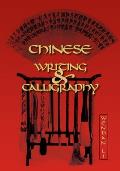
It has a thorough introduction to the history of Chinese characters, as well as the aesthetic principles behind their construction as artistic forms. Also included are explanations of the tools of calligraphy and finally a large section of practice exercises in standard style 楷書. What's nice about this book is that Professor Li is a specialist in linguistics, so the information she provides is scholarly and reliable. She is also a practicing calligrapher herself, so not only are the illustrations in the historical section very instructive, but the models provided in the practice exercise are so elegant and graceful you just want to copy them. In short, the book is an excellent foundational text for the anglophone classroom.
Wendan Li. Chinese Writing and Calligraphy (Latitude 20 Books). Hawaii: University of Hawai’i Press (2010) ISBN: 0824833643
Wednesday, November 14, 2012
Course Syllabuses Re: The 3.11 Disasters
Sophia University in Tokyo has assembled a fantastic list of courses being taught in Japan and the US about the 2011 Great Tohoku Earthquake and Tsunami.
Teaching 3.11 Syllabi Collection
Most are in English or Japanese, though there is a link to one resource in Italian.
Teaching 3.11 Syllabi Collection
Most are in English or Japanese, though there is a link to one resource in Italian.
Saturday, November 10, 2012
Fooling around with fûga 風雅
Some famous phrases associated with fûga (poetry, elegance) from the Bashô school.
There might be some problems with these because I'm taking them out of context. These are more or less notes to myself about their general meaning rather than 100% reliable translations. I'm just thinking about how the Bashô school describes poetic work.
There might be some problems with these because I'm taking them out of context. These are more or less notes to myself about their general meaning rather than 100% reliable translations. I'm just thinking about how the Bashô school describes poetic work.
- 俳諧といへども風雅の一筋なれば姿かたちいやしく作りなすべからず。
Though it be called haikai, it is on a continuum with everything artistic, so you should compose it in a way that is vulgar neither in content nor in form.
- Bashô, cited in Mukai Kyorai's 向井去来 Tabine ron 旅寝論
- 詩・歌・連・俳はともに風雅なり。上三つのものには余す所もあり。その余す所まで俳はいたらずといふ所なし。
Poetry in Chinese, waka, renga, and haikai are all artistic forms of expression. The first three have left areas unexplored. Of those unexplored areas, none may be called unreachable by haikai.Read more >>
- Dohô 土芳, in Sanzôshi 三冊子.
Monday, October 22, 2012
Syllabus: East Asian Calligraphy in the Community
My service learning course is underway. I'll post some reflections on our work in the course soon. For now, here's the syllabus, minus the assignments schedule:
JPN 190 FIRST YEAR SEMINAR: EAST ASIAN CALLIGRAPHY IN THE COMMUNITY Made possible by a grant from the Center for Community Partnerships at Emory University
Course Description:
The class uses brush calligraphy as a focal point from which to begin exploration of common values in the cultures of East Asia, and the ways in which some of these values can enrich life in modern, globalized communities. In premodern China, Japan, and Korea, skill in brush calligraphy was one of the most important attributes of an educated, civilized person; it was regarded as a means of both learning and of demonstrating virtue.
Although it was originally developed in China, as early Koreans and Japanese embraced Chinese knowledge, they also took on Chinese writing system and calligraphy. Thus, calligraphy as a means to educate and enrich life in China became an early example of intercultural exchange in countries far from its point of origin, and continues to offer amedium of common appreciation for people from a wide range of linguistic groups and cultural backgrounds.
During the first few weeks of the class we will read fundamental texts related to East Asian philosophy. We will also practice the basic strokes of brush calligraphy. In the second part of the course, we will meet once a week on the Emory campus, and continue our study and discussion of East Asian cultural theory. The second session of class each week will be held at Clarkston Community Center, where we will join the senior learning group in practicing and assisting with students working there (transportation is provided). During the course of these sessions at CCC, students will be invited to consider the applicability of the cultural theory to their own experience, and observe their CCC classmates'experience as well. They will be asked to keep a reflection journal, and to participate in planning and organizing an exhibition of final projects at the CCC.
(Follow link to read more >>)
JPN 190 FIRST YEAR SEMINAR: EAST ASIAN CALLIGRAPHY IN THE COMMUNITY Made possible by a grant from the Center for Community Partnerships at Emory University
Course Description:
The class uses brush calligraphy as a focal point from which to begin exploration of common values in the cultures of East Asia, and the ways in which some of these values can enrich life in modern, globalized communities. In premodern China, Japan, and Korea, skill in brush calligraphy was one of the most important attributes of an educated, civilized person; it was regarded as a means of both learning and of demonstrating virtue.
Although it was originally developed in China, as early Koreans and Japanese embraced Chinese knowledge, they also took on Chinese writing system and calligraphy. Thus, calligraphy as a means to educate and enrich life in China became an early example of intercultural exchange in countries far from its point of origin, and continues to offer amedium of common appreciation for people from a wide range of linguistic groups and cultural backgrounds.
During the first few weeks of the class we will read fundamental texts related to East Asian philosophy. We will also practice the basic strokes of brush calligraphy. In the second part of the course, we will meet once a week on the Emory campus, and continue our study and discussion of East Asian cultural theory. The second session of class each week will be held at Clarkston Community Center, where we will join the senior learning group in practicing and assisting with students working there (transportation is provided). During the course of these sessions at CCC, students will be invited to consider the applicability of the cultural theory to their own experience, and observe their CCC classmates'experience as well. They will be asked to keep a reflection journal, and to participate in planning and organizing an exhibition of final projects at the CCC.
(Follow link to read more >>)
Wednesday, July 4, 2012
"Onna daigaku": Character Building Calligraphy II
To start part two, here's a useful list of sources on the history of women's literacy in Japan:
Link to Women and Books in Japan (Cambridge)
Okay, back to Onna daigaku. We've now reached the Kyoho period. Ishikawa tells us that in 1716, there was the simultaneous Osaka-Edo publication of Onna daigaku takarabako, the first of a flock of similarly-named texts. It followed the example of Onna Imagawa and Onna jitsugokyô in organization and content, arranged in the form of admonitions. Similarly, aside from being a reader, it was also a calligraphy copybook. Furthermore, it was profusely illustrated.
According to Ishikawa, it's not clear why this (these) texts were called Onna daigaku. The editor is not named, there is no preface, and there's no indication in the main text either. It's entirely speculative to say so, but during the early modern period education for boys was drawn from Confucian curriculum, Song studies (= neo-Confucianism) was very influential, so the Four Books was the basis of education. The Four Books were Daxue, Zhongyong, Lunyu, and Mengzi, and of these, Daxue was the most important. So, perhaps Onna daigaku was thus named in order to function in girls' education the same way that Daxue did for that of boys? In other words, girls should have it to hand, internalize its principles -- the first, most important moral textbook.
Click "read more" for the rest.
Link to Women and Books in Japan (Cambridge)
Okay, back to Onna daigaku. We've now reached the Kyoho period. Ishikawa tells us that in 1716, there was the simultaneous Osaka-Edo publication of Onna daigaku takarabako, the first of a flock of similarly-named texts. It followed the example of Onna Imagawa and Onna jitsugokyô in organization and content, arranged in the form of admonitions. Similarly, aside from being a reader, it was also a calligraphy copybook. Furthermore, it was profusely illustrated.
According to Ishikawa, it's not clear why this (these) texts were called Onna daigaku. The editor is not named, there is no preface, and there's no indication in the main text either. It's entirely speculative to say so, but during the early modern period education for boys was drawn from Confucian curriculum, Song studies (= neo-Confucianism) was very influential, so the Four Books was the basis of education. The Four Books were Daxue, Zhongyong, Lunyu, and Mengzi, and of these, Daxue was the most important. So, perhaps Onna daigaku was thus named in order to function in girls' education the same way that Daxue did for that of boys? In other words, girls should have it to hand, internalize its principles -- the first, most important moral textbook.
Click "read more" for the rest.
Subscribe to:
Posts (Atom)